
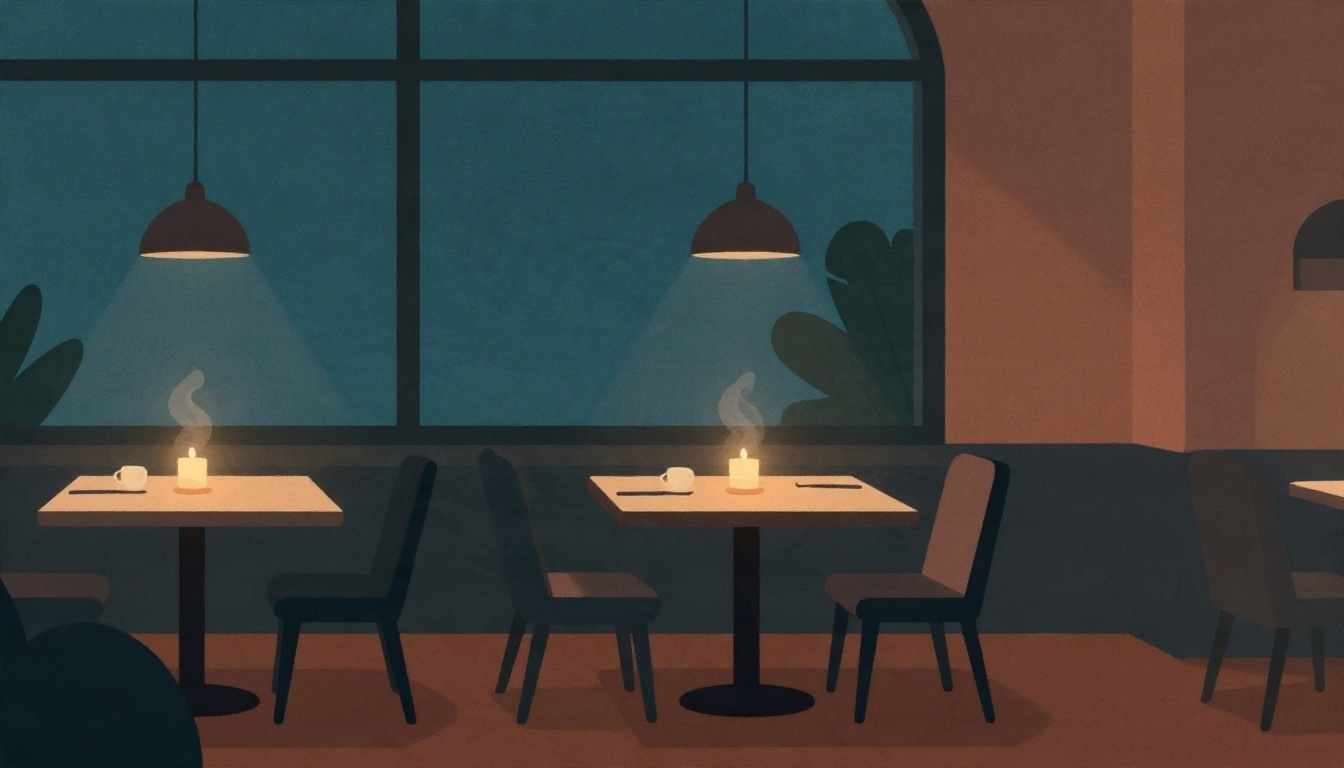
According to restaurant photography guidance, why should you shoot a nighttime venue in the evening?
Select one answer.
Why your menu shots aren't telling the whole story
If your restaurant's photos look interchangeable with every other place in town, the problem usually isn't the food — it's the missing atmosphere. A technically perfect plate can still fail to earn attention when the image has no sense of place, mood, or point of view. Guests deciding where to book aren't only assessing the food; they're reading the atmosphere, confidence, and craft behind it.
Atmospheric photography fixes that gap. Instead of documenting dishes on blank surfaces, it captures the room, the light, the texture, and the human moments that make your restaurant feel like yours. The goal is imagery that makes a guest recognize your restaurant before they see your name.
Start with the brand story, not the shot list
The most effective restaurant imagery begins before anyone plates a dish. Before production, define what your brand stands for, who it serves, and what a guest should feel when they walk through the door. A chef-led tasting menu, a fast-casual lunch spot, and a neighborhood bakery can all serve excellent food, but they should not look alike in a photograph.
Practical questions to answer first:
- Is the brand refined and restrained, energetic and social, familiar and comforting, or ingredient-driven and artisanal?
- Does the guest come for a quick weekday meal, a celebratory evening, or a relaxed weekend ritual?
- What should feel consistent from image to image — a warm low-light dining mood, natural textures, or energetic scenes of shared plates?
These answers shape every creative choice, from lighting and surface selection to styling and composition. As one food branding guide puts it, consistency doesn't mean photographing every dish the same way — it means each image belongs to the same world.
Build a shot list around atmosphere, not just food
A strong restaurant shoot covers more than core menu items. Structure your shot list around these categories:
- Core menu items: bestsellers, signature plates, and most-searched dishes.
- Atmosphere: exterior shots, bar scenes, dining areas, and the details that signal your concept.
- People and service: plating moments, team interactions, and behind-the-scenes action.
- Texture and character: the grain of a wooden countertop, a steaming cup, the gleam of a wine glass.
That last category matters more than most owners expect. Some of the most powerful restaurant images aren't of food at all — they're the moments in between that convey texture, motion, and character.
Get the lighting right — it carries the mood
Lighting is one of the first things to consider in restaurant photography. The right light creates the atmosphere and communicates the mood guests might experience. If your space is light and bright, capture that; if it's dark and moody, do the same. Great lighting also highlights the features of the environment itself.
A few practical rules:
- Shoot at realistic opening times. A brunch spot should be photographed in daylight; a nighttime venue should be shot in the evening, when its character comes alive.
- Embrace warm, low light rather than fighting it. Adjust white balance and ISO to preserve the glow instead of flattening it with harsh flash.
- Balance artificial and ambient light. When you light a dish, a fast shutter speed can leave the background dark and underexposed. Slowing the shutter on a tripod lets the room's character show through, so the background reads as part of the story.
- Use side light for texture. Light approaching from the side creates gentle shadows that define crispy edges, flaky pastry, and glossy sauces.
Keep one visual identity across every channel
Atmosphere only works as branding if it's consistent. Define the elements that should feel the same from image to image — a warm dining-room mood, natural textures, a consistent color grade — and apply them across your website, social posts, menus, and delivery listings. A guest should feel your brand's personality whether they see a close-up of a cocktail garnish or a wide image of a crowded table.
Before production, also identify where each image will live. Website banners need landscape frames, social stories need vertical ones, and delivery platforms need clean, close-up crops. Images that can't be used where you need them are an expensive missed opportunity.
A quick pre-shoot checklist
- Write one sentence describing the feeling a guest should have on arrival.
- Agree on a mood direction: bright and airy, or cozy and evening-toned.
- List hero dishes plus atmosphere, people, and texture shots.
- Confirm shoot times that match real service hours and light.
- Map each image to the channel where it will be used.
- Get written consent for any identifiable person in the photos.
How the Featured Expert Can Help
Adrienne Leigh Moore is a Bay Area photographer who specializes in atmospheric, storytelling photography for brands, businesses, and individuals. She offers immersive collaborations and nature photography services, targeting luxury eco-retreats and design-forward spaces. Her work has been featured in Architectural Digest, 7x7, CB Magazine, Caribbean Living Magazine, and Voyage LA. If you want imagery that feels immersive and cinematic rather than interchangeable, you can explore her work and get in touch.
Test your knowledge
Atmospheric restaurant photography is about capturing mood, light, and texture — not just plated dishes. Take this quick quiz to check what you've learned.