
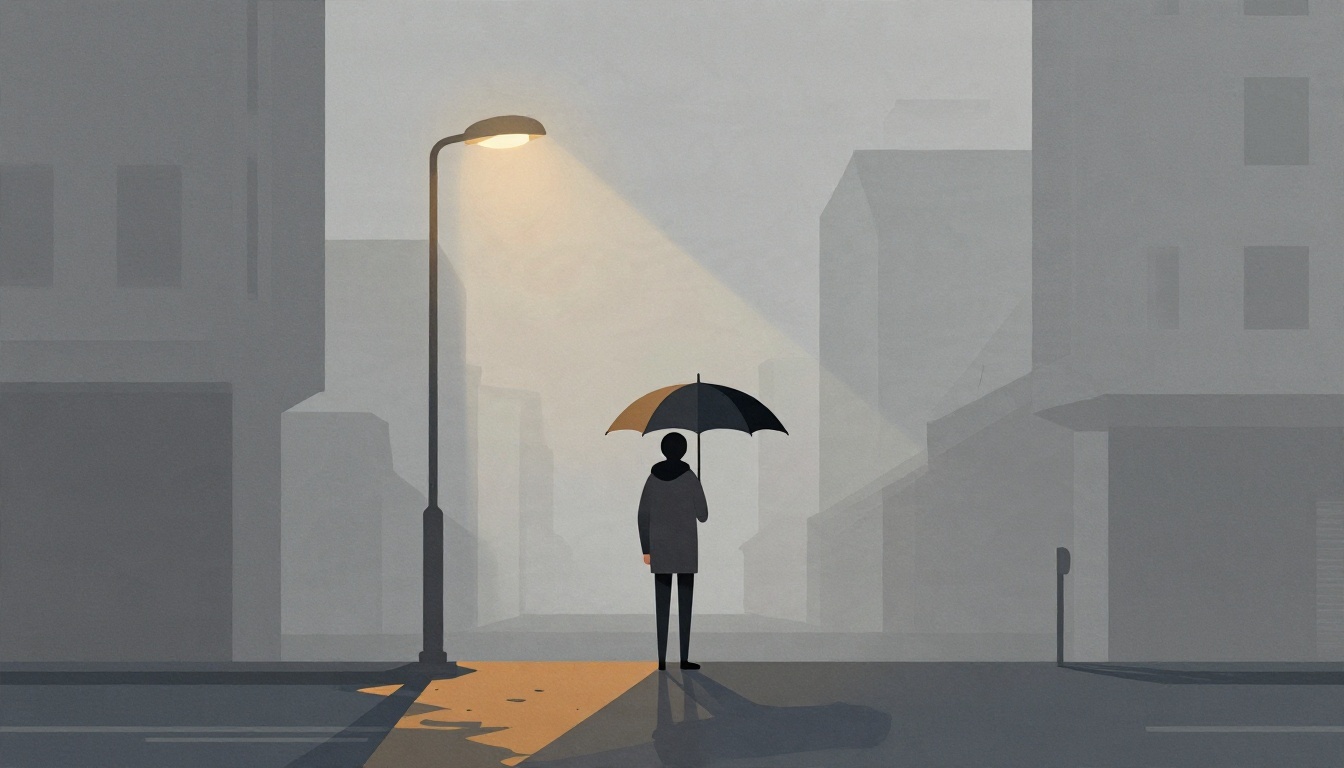
According to the research, what does fog do to a scene that makes it useful for atmospheric urban photography?
Select one answer.
Why urban atmosphere is hard to capture
Cities are visually chaotic. Power lines, signage, traffic, and clutter compete for attention, and flat midday light makes everything look like a snapshot. The problem isn't your camera — it's the conditions and the way you're composing. Atmospheric urban photography solves this by using weather, light, and depth to strip a scene down to shape, tone, and mood.
Fog and mist are the most powerful tools you have. As 500px explains, fog scatters light and reduces contrast with distance, so objects close to the camera stay dark and defined while those farther away fade toward white. That creates automatic depth — atmospheric perspective — and hides the clutter you'd otherwise have to compose around.
Start with the right conditions
Atmosphere doesn't happen on a clear, sunny afternoon. It happens when moisture, temperature, and light align.
- Watch the dew point. Fog forms when moist air cools to its dew point. In autumn, mild days followed by cold, clear nights make early mornings especially reliable.
- Look for low ground. Valleys, riversides, coastlines, and low-lying areas where cool air settles overnight are your best bets.
- Go early. Morning fog usually burns off within an hour or two of sunrise, and the most interesting conditions often appear just as it begins to lift and break apart.
- Check wind. Little to no wind keeps mist intact instead of blowing it away.
Rain works too. Wet streets, puddles, and reflections give you the same moody separation without waiting for fog.
Compose for depth, not detail
When visibility drops, detail disappears — so composition has to carry the image.
- Find one clear subject. A lone lamppost, a bridge, a figure on a path, a distinctive building silhouette. Fog photography depends on recognizable shapes, so choose subjects with strong outlines.
- Layer your scene. Rows of streetlights, overlapping buildings, or a receding road let you show fog thickening with distance. As Mikko Lagerstedt notes, a dark, sharp foreground against a light, soft background creates a massive sense of depth.
- Shoot toward the light. Fog looks flat and grey on its own. When the sun or a streetlight is behind the mist, water droplets catch the light and glow, producing god rays and intense atmosphere. Shooting with the light behind you flattens the fog.
- Use reflections. Wet pavement, glass, and puddles double your subject and add a second layer of visual interest — a technique Shotkit highlights in its urban photography guide.
- Embrace minimalism. Fog has already removed everything unnecessary. Don't fight it by cramming in more elements.
Nail your exposure
Your camera's meter will misread foggy scenes. It sees all that whiteness and darkens the image to make it neutral grey, producing muddy, underexposed photos.
- Dial in positive exposure compensation. Around +0.7 to +1.0 EV keeps white fog bright and clean rather than grey.
- Check your histogram. Push data to the right without clipping highlights completely.
- Avoid the dehaze slider. In editing, dehaze is designed to remove fog — using it destroys the atmosphere you worked to capture.
- Consider black and white. Without color to distract, shape, tone, and texture take over, which is why monochrome suits atmospheric urban work so well.
A quick field checklist
- Check dew point and wind the night before
- Arrive before sunrise, stay as fog lifts
- Bring a tripod for low-light and long exposures
- Find one strong foreground subject first
- Expose bright, then verify on the histogram
- Edit for mood, not clarity
How the Featured Expert Can Help
Adrienne Leigh Moore is a Bay Area photographer who specializes in atmospheric, storytelling photography for brands, businesses, and individuals. She offers immersive collaborations and nature photography services, targeting luxury eco-retreats and design-forward spaces. Her work has been featured in Architectural Digest, 7x7, CB Magazine, Caribbean Living Magazine, and Voyage LA. You can see her portfolio and inquire about collaborations at adrienneleighmoorephotography.com.