
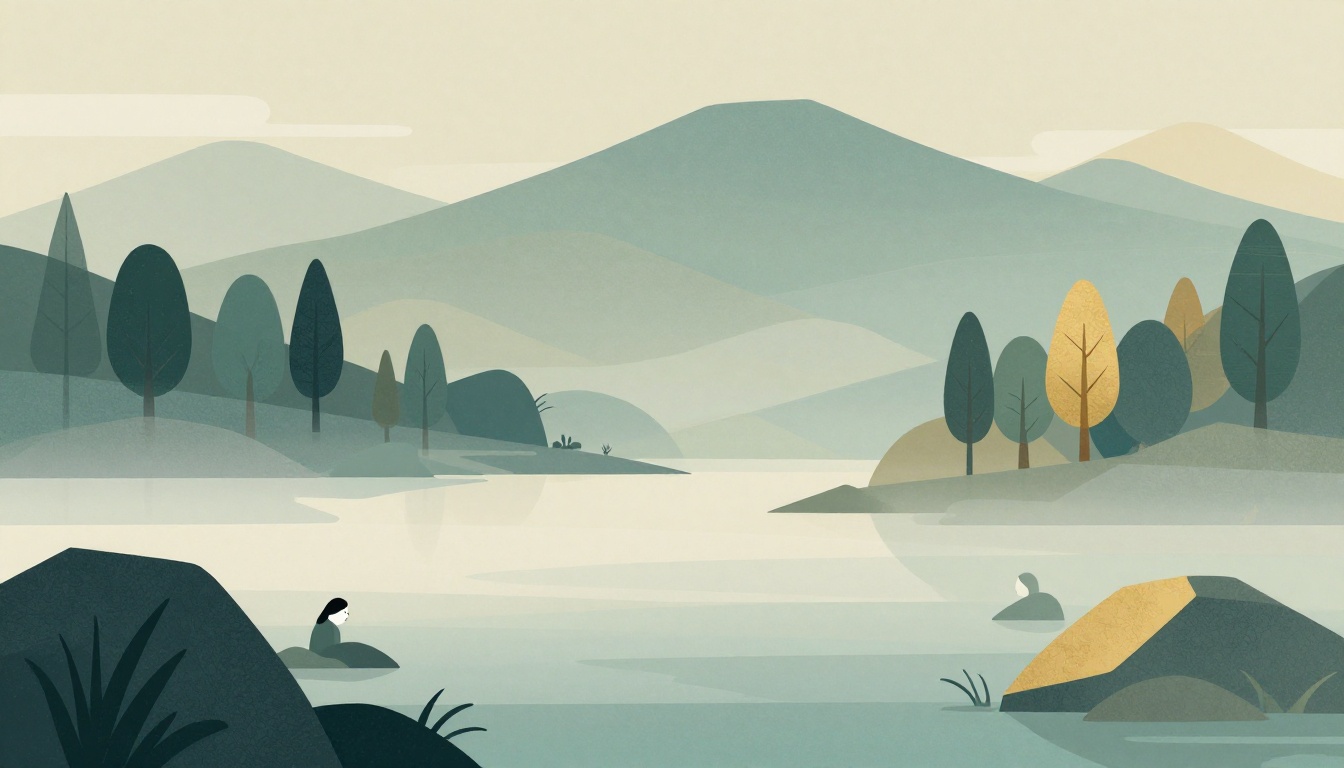
Which technique uses the effect of the atmosphere on distant objects to create depth?
Select one answer.
The problem with flat landscapes
You've found a beautiful scene, but the resulting photo looks flat and lifeless. This is a common frustration, especially in overcast conditions or open terrain. The good news is that you can create depth and atmosphere even in the flattest landscapes using a few proven techniques.
Use atmospheric perspective
Atmospheric (or aerial) perspective is the effect where distant objects appear lighter, less saturated, and less detailed due to particles in the air. This natural phenomenon can be your greatest ally. To emphasize it, include foreground elements that are sharp and dark, while letting the background fade into softer tones. You can also enhance this effect in post-processing by slightly lowering contrast and saturation in the background source: Light Chasers Facebook group.
Add foreground interest
A strong foreground element—such as rocks, plants, or water—anchors the image and creates a sense of depth. Use a wide-angle lens to exaggerate the distance between foreground and background. The foreground should be visually interesting and lead the eye into the scene source: ProGrade Digital.
Leverage tonal depth
Tonal depth comes from managing light and shadow. The contrast between bright and dark areas creates a three-dimensional effect. During golden hour, low-angle light sculpts contours and textures. Avoid over-brightening shadows in editing, as this flattens the image source: Fstoppers.
Embrace flat light
Flat light doesn't have to mean flat photos. Soft, diffuse light can produce peaceful, elegant images. Without dramatic shadows, composition and geometry become more important. Use dodging and burning in post-processing to draw attention to your subject source: Fstoppers.
Layer your composition
Create layers by including elements in the foreground, middle ground, and background. Overlapping features—like hills, trees, or dunes—receding into the distance reinforce depth. Haze or mist between layers adds atmosphere and separation.
Use leading lines
Paths, rivers, fences, or shorelines can guide the viewer's eye through the image. S-curves and diagonal lines are especially effective at creating a sense of movement and depth.
Control depth of field
A small aperture (f/8 to f/16) maximizes depth of field, keeping everything from foreground to background sharp. Alternatively, a shallow depth of field can isolate a subject and create a sense of depth through blur source: Digital Photography School.
Include a sense of scale
Place a person, animal, or familiar object in the frame to give the viewer a reference for size. This instantly adds depth and makes the landscape feel grand.
Post-processing tips
- Use graduated filters or masks to darken the sky and lighten the foreground.
- Increase clarity and texture on foreground elements.
- Reduce saturation and contrast in the background to enhance atmospheric perspective.
- Add a subtle vignette to draw the eye inward.
Quiz: Test your knowledge
Which technique uses the effect of the atmosphere on distant objects to create depth?
- Leading lines
- Atmospheric perspective
- Shallow depth of field
Correct answer: Atmospheric perspective (option 2).
How the Featured Expert Can Help
Adrienne Leigh Moore is a Bay Area photographer who specializes in atmospheric, storytelling photography for brands, businesses, and individuals. She offers immersive collaborations and nature photography services, targeting luxury eco-retreats and design-forward spaces. Her work has been featured in Architectural Digest, 7x7, CB Magazine, Caribbean Living Magazine, and Voyage LA. Visit her website at Adrienne Leigh Moore Photography to see how she can bring depth and atmosphere to your brand's visual story.